
10
Self-Cleaning Micro-Sparger
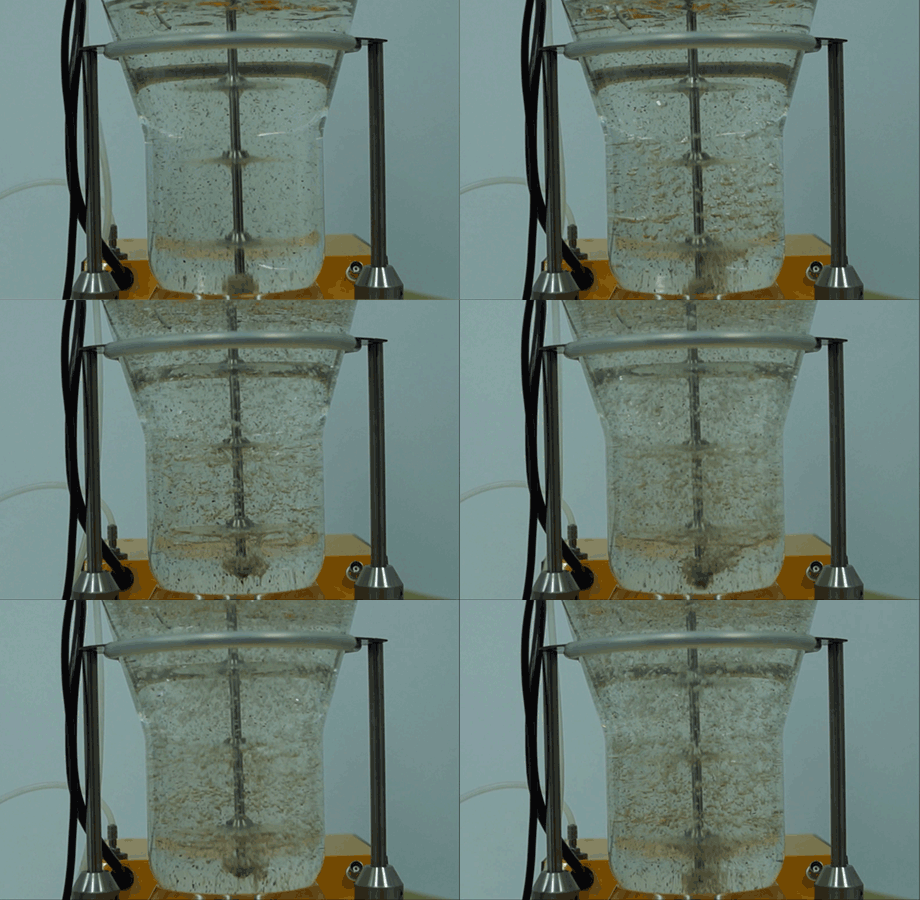
Rigid glass or sintered metal spargers frequently clog when nutrient salts crystallize or media dries at the gas outlet. The system features an elastic silicone micro-sparger with dynamic micro-punctures. Under active gas flow, the elastic pores stretch open to deliver tiny bubbles for high oxygen transfer. When gas flow stops, the pores automatically snap shut to prevent medium backflow. Temporary gas pressure increases expand the elastic matrix to dislodge salt deposits directly into the medium.
More about Self-Cleaning Micro-Sparger
Efficient gas transfer is essential for maintaining dissolved oxygen levels and supporting aerobic cultivation. In laboratory bioreactors, however, conventional spargers are often susceptible to clogging, particularly when highly mineralized media are used. As evaporation occurs around the sparger openings, dissolved salts may gradually accumulate and eventually block the gas outlets, restricting airflow and potentially interrupting the cultivation process.
The LAMBDA Minifor2Bio touch addresses this challenge with a self-cleaning micro-sparger specifically designed to maintain reliable gas distribution during long-term fermentations and continuous cultivation.
LAMBDA self-cleaning micro-sparger.
Engineering Concept
During aeration, each air bubble causes a small volume of culture medium to move in and out of the sparger openings. As successive bubbles are formed, traces of the medium may dry at the edges of the orifices. In media containing high concentrations of dissolved salts, these deposits gradually accumulate and may eventually obstruct the gas passages.
Conventional spargers require manual cleaning or replacement once clogging occurs, and some systems rely on replaceable sparger elements to simplify maintenance.
The LAMBDA self-cleaning micro-sparger utilizes a specially developed elastic silicone material containing miniature gas outlets. When air is not flowing, the elastic pores remain closed. As air pressure increases, the pores open and allow gas bubbles to form. If mineral deposits begin to restrict the openings, the resulting increase in pressure causes the elastic pores to expand slightly, releasing the accumulated deposits into the culture medium and restoring the gas pathway.
This self-cleaning mechanism continuously reduces the accumulation of deposits, maintaining consistent gas flow without additional mechanical components.
Insert Figure 6.2 – Self-cleaning mechanism of the elastic silicone micro-sparger.
Design Advantages
The elastic micro-sparger significantly reduces the risk of sparger blockage during cultivation, particularly in media with a high mineral content or during extended fermentation runs.
Maintaining consistent gas flow improves process stability, supports reliable dissolved oxygen control and reduces the likelihood of interrupted experiments caused by restricted aeration.
The absence of removable sparger elements also simplifies maintenance and minimizes cleaning requirements between cultivation cycles.
By combining an elastic micro-porous design with a passive self-cleaning mechanism, the LAMBDA Minifor2Bio touch provides reliable and continuous gas distribution while reducing maintenance and improving long-term operational reliability.
Comparison of Sparger Technologies
Feature | Conventional Metal Sparger | Conventional Ceramic Sparger | LAMBDA Self-Cleaning Micro-Sparger |
Susceptibility to salt deposits | High | Moderate | Low |
Self-cleaning mechanism | No | No | Yes |
Elastic sparger material | No | No | Yes |
Stable gas distribution during long cultivations | Limited | Moderate | Excellent |
Maintenance frequency | Moderate–High | Moderate | Low |
Risk of airflow restriction | Moderate–High | Moderate | Low |
Suitable for highly mineralized media | Limited | Moderate | Excellent |